




It’s 2026 and a handful of people have taken on the thankless-but-still-fulfilling task of attempting to decolonise food writing. The majority of white food writers, however, continue to either put Asian and African food on the back-burner, or use blatantly racist language in their work.
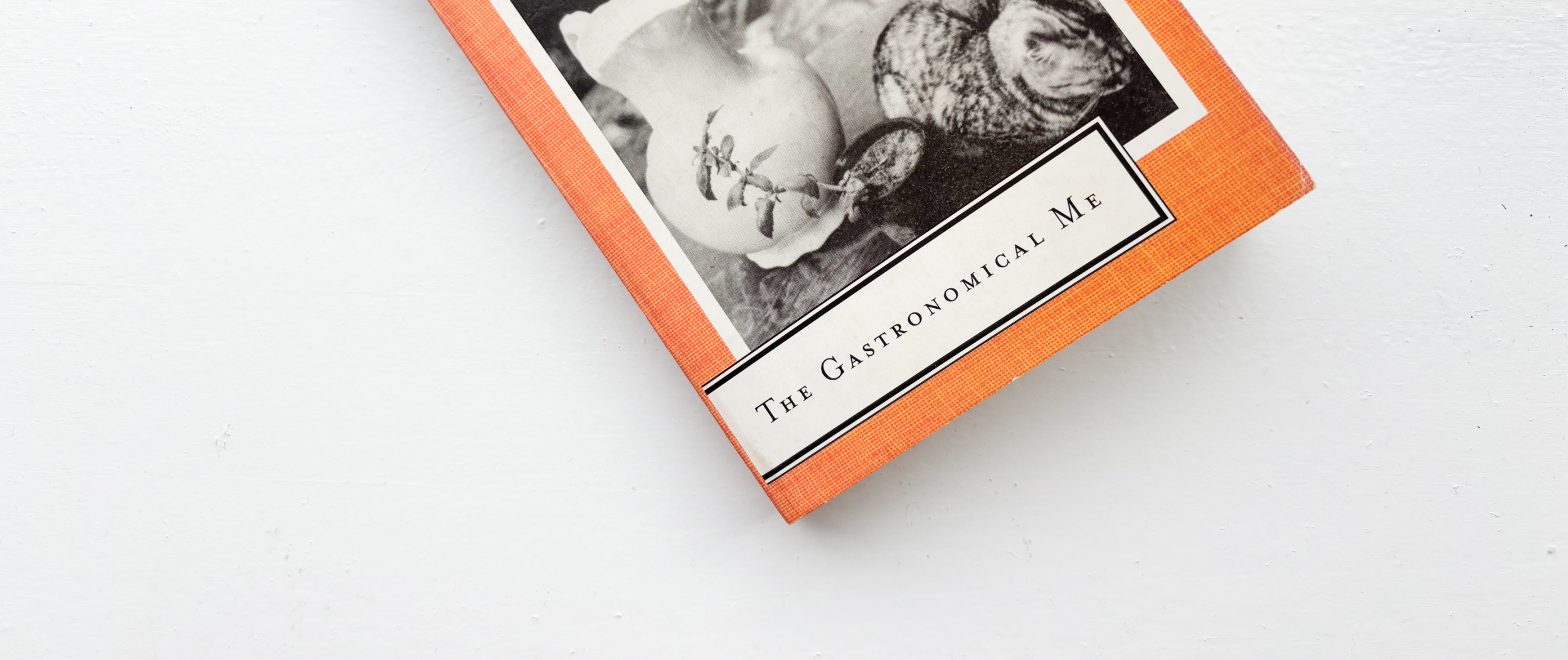
Unfortunately, we’re not past the era of assuming Japanese food to be expensive but Chinese to be cheap, with WhatsApp dialogue dedicated to how India and Morocco are difficult to travel through instead of how harmful that assumption is. And a piece of writing as celebrated as The Gastronomical Me should have set a better example.
“The truth is, I think, that small children have very sensitive palates. A little pepper is to them what a highly spiced curry is to us. They can stand sweetness best, perhaps, but anything sour or spiced is actually painful to them,” MFK Fisher writes in the first few pages of the book that is so revered, you’d think the title of its first edition was engraved with gold foil.
Reading being at its most fruitful when the writer knows better than the reader is an unspoken pact that the book fails to honour, unless the target audience was meant to be largely white. And that was most likely the case in that day and age, which I can say with confidence since the west assumes English to be a bilingual Indian’s second language even now.
The careless use of “curry” makes me want to put the book down immediately. To my dismay, that’s only one of the first few sentences that makes me shift in my seat.
A few pages later, Fisher continues, confident in her oblivion: “Once I made poor Anne share my proud misery with something I called Hindu Eggs. I was sure I had read about it in Fanny Farmer; all you did was add curry powder to a white sauce and pour it over sliced hardboiled eggs.”
Fisher belonged to an age when air travel wasn’t as thoughtful as it is today, or she might have known better. Airborne food trolleys have begun catering to every dietary restriction possible, and one of the meal options that some airlines list is “Hindu vegetarian meal”.
While there isn’t enough written dogma to back it, Hinduism is believed to largely advocate vegetarianism — even taking a discriminatory turn when certain castes consider themselves to be higher on the spiritual staircase because the utensils in their households remain uncontaminated by meat. The Indian caste system and related food habits is a topic for another essay, but assigning the “Hindu” title to a dish made with eggs is telling of how little research Fisher might have done for her book that has gone on to become a well-regarded masterpiece.
It only gets worse when she says she uses “curry powder” as the flavouring for these “Hindu Eggs”, reducing an entire community to an invention that their colonisers used as an attempt to replicate an entire spectrum of flavours.
My guess is that the use of “Hindu Eggs” might also be a manifestation of the ignorant western assumption that the national language of India is “Hindu”.
“When Mother said she and Father would be away one night, and I might get supper alone, I hid the gleam in my eye when she told me to put the sauce and the eggs in a casserole, and be sure to drink milk, and open a jar of plums or something for dessert,” Fisher writes in the same chapter, giving away the reductive western habit of equating “curry” with heat, when, in reality, many iterations in its home country aren’t even spicy.
Fisher is evidently in a happy bubble, exoticising the unfamiliar as she goes along: “The word Hindu danced sensuously in my mind, safely unsaid until Mother was out of the house.
[…]
The rich brown sauce bubbled and sent out puffs of purely Oriental splendour.”
The use of “Oriental” has been discussed and debated in more recent decades, but it should have been basic writing knowledge to avoid the word even in Fisher’s time. No one was using “Occidental” to describe anything western even then, and to anyone with an informed worldview, the terminology shouldn’t have done a solo tango.
Food from Asia — especially South Asia — has been the subject of derogatory conversation in the west for far too long and far too often. Too spicy, too dry, too much sauce, too alien. In an ideal world, a James Beard Award category wouldn’t be named after someone who wrote:
“I had used curry without knowing anything about it, and when the sauce looked boringly white I had proceeded to make it richly darker with probably five tablespoonfuls of the exotic powder.
[…]
The next morning there were only a few blisters, just inside our lips.”
My gripes with Fisher end here. I’ll let you guess whether that’s because she doesn’t use racist tropes later in the book, or because I couldn’t get myself to continue reading.