Skewered, barbecued meat is a common feature on the streets of Xinjiang, where the majority of the population is Muslim. Chinese Muslims, including Uyghur people, call the skewered meat “chuan”.
Xinjiang was along the Silk Road trade route that connected China and the Middle East. I wonder if that’s the reason Chinese meat skewers, similar to kebabs, found pride of place in this region.
The menu at King Skewer on Cathedral Street offers an extensive testimony of Xinjiang’s skewer culture. It’s also an elaborate study in organ meat, including everything from chicken gizzard and lamb kidney to pork intestine and duck tongue — telling of times and communities that believed in foraging and using up every possible part of an animal.
Since I’m an organ meat virgin, my bravado is limited and this review isn’t for those looking for results of taste tests conducted on the aforementioned body parts.
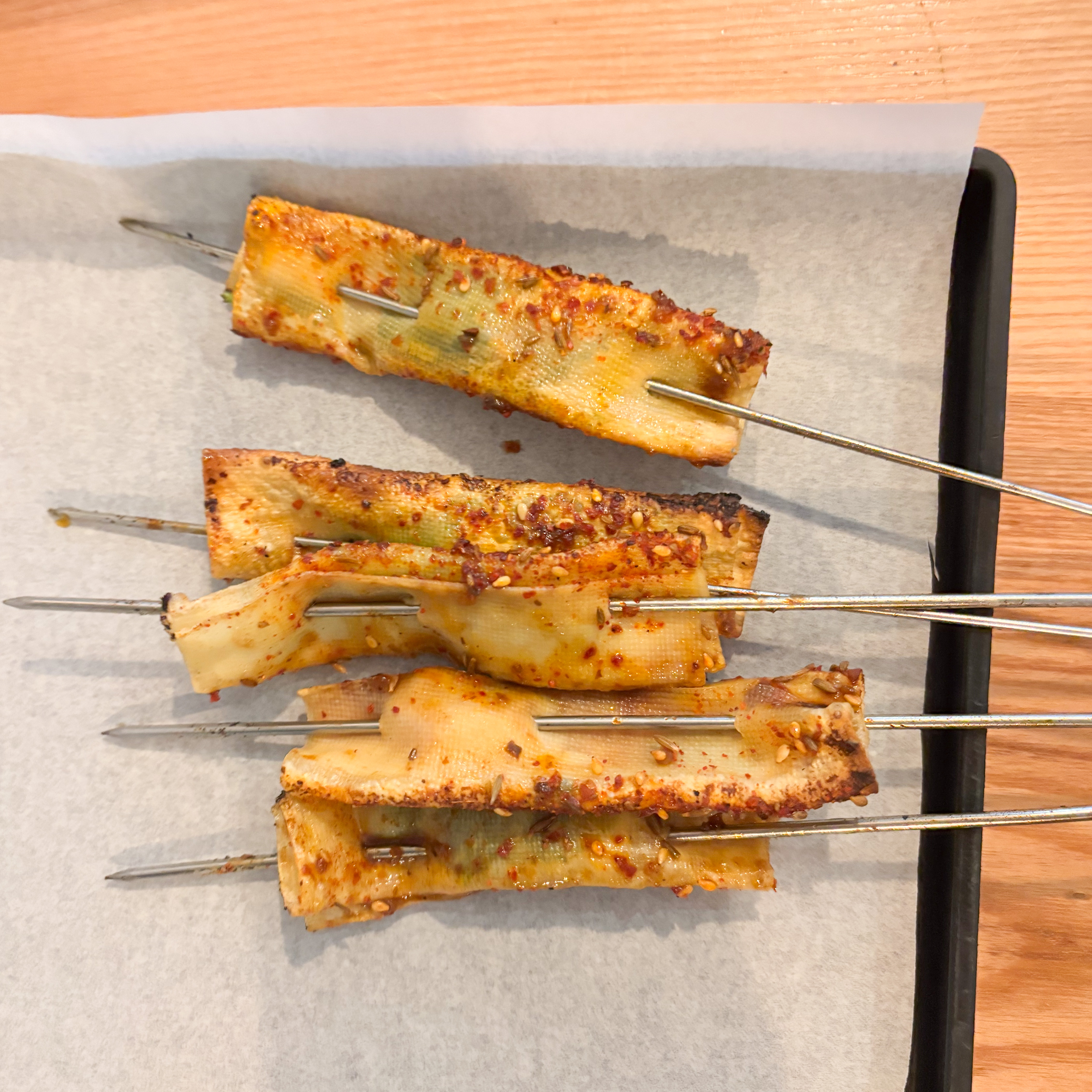
After we order, the first to arrive are the dried tofu rolls. These are dehydrated sheets of tofu rolled around spring onion greens, each metal skewer piercing them like a needle running along a hem, with cumin, sesame, and coarsely ground chilli powder sticking to the outside. They’re chewy, and the spring onion adds a slight pungency.
The serving and eating process is systematic. Staff continue to place skewers on a tray lined with parchment paper as they arrive, and we leave the empty skewers to be collected on one side.
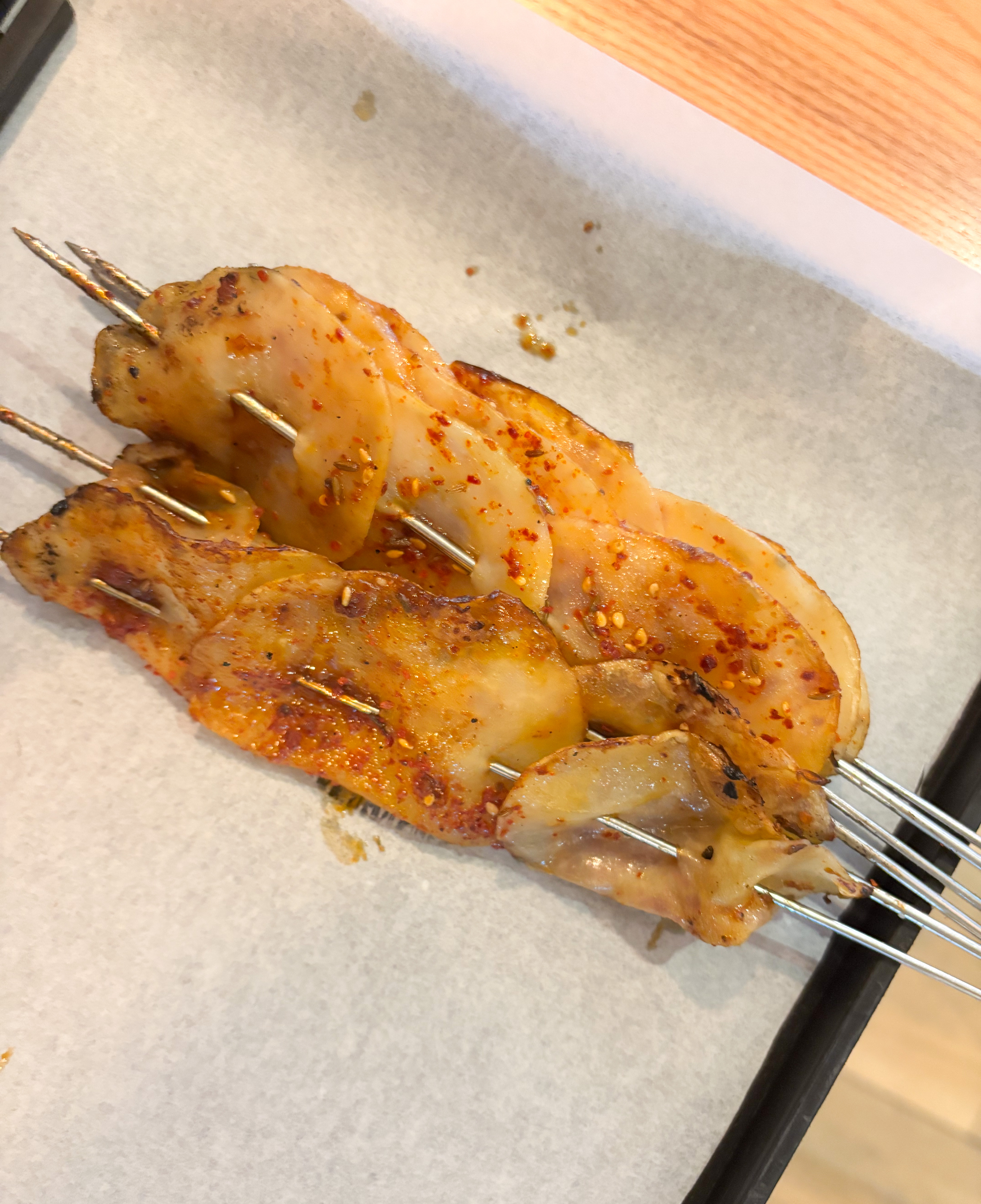
The sliced potato skewers are next: the thinnest possible slices of potato, also coated with cumin, sesame, chilli powder, and a hint of salt. Softer than crisps but still retaining a crunch, these are satisfying but could have reached an addictive level with a bit more salt.
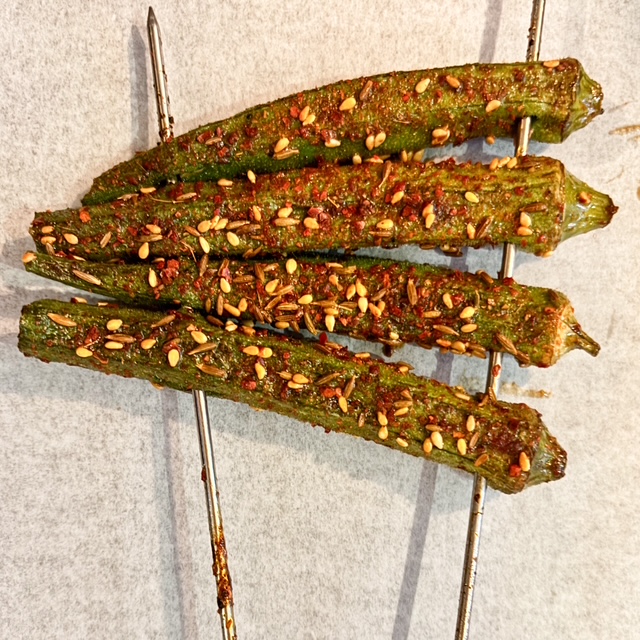
Four sticks of lady’s finger arrive with two skewers balancing them, cooked well but not soggy, with a generous slathering of the spice mix that’s consistent across all skewers.
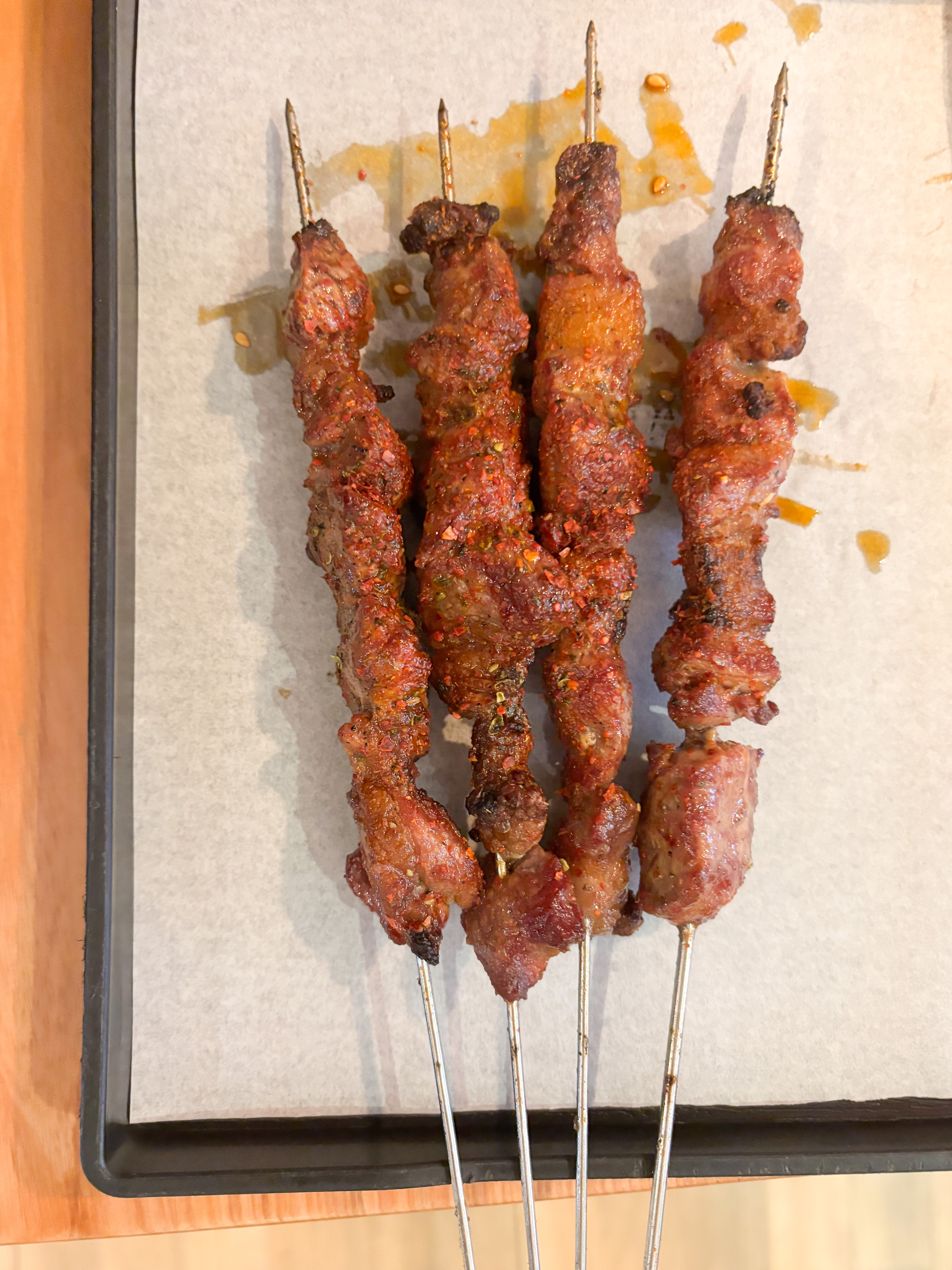
Despite being heavily tempted by the vegetarian options, I can’t resist ordering the spiced lamb skewers. Our server warns me that these are extra spicy, but that doesn’t deter me. The meat is cooked so that its fatty juices make it glisten. In all four skewers in the portion, I find an amount of fat nearly equal to that of the meat. Tugging at each piece with my chopsticks and sliding it off its skewer, I eat happily — without questions about the fat — because I have no doubt that the kitchen knows what it's doing.
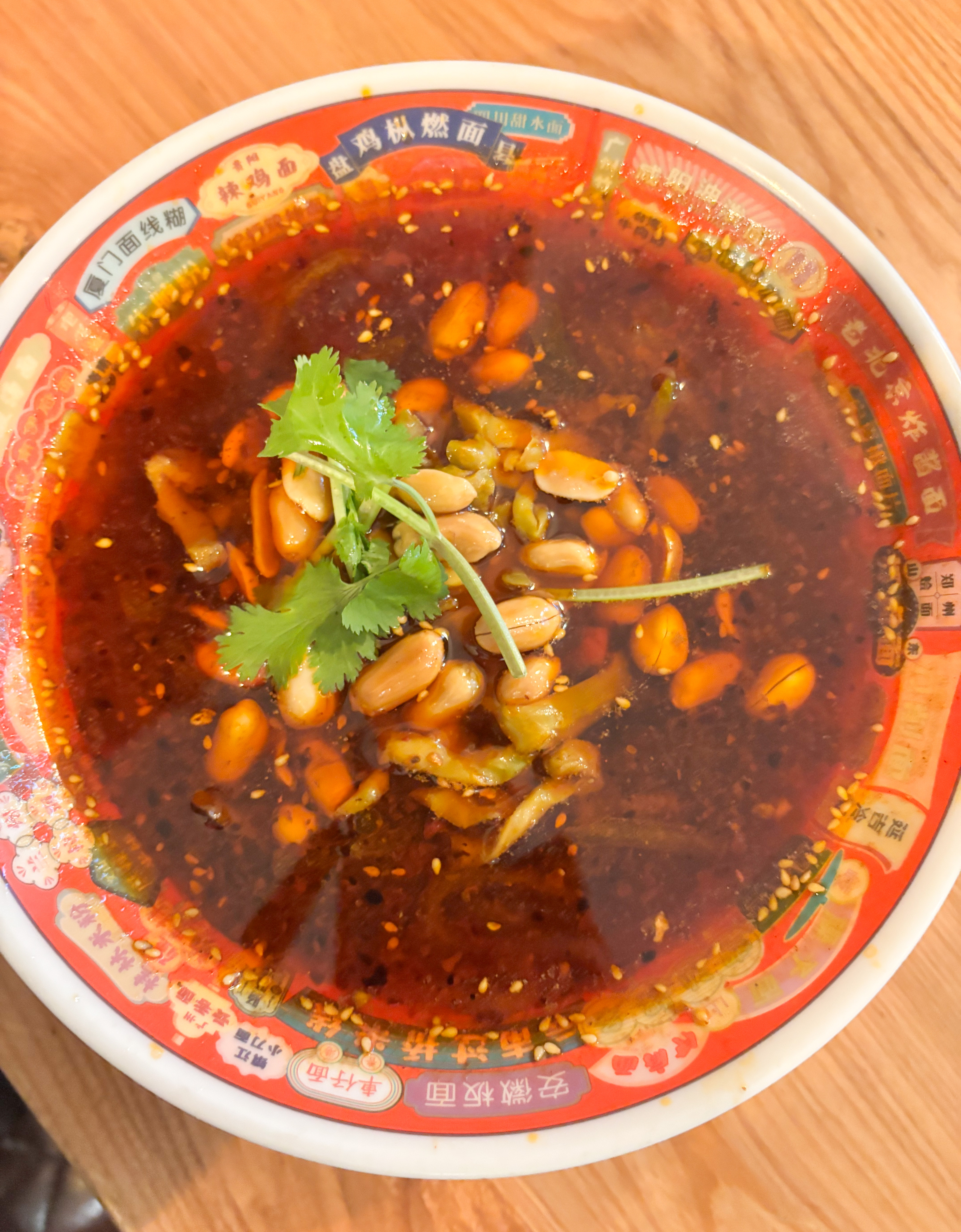
We soon realise the skewers alone won’t fill us up, so we get a portion of the spicy and sour noodles to assist our gratification. Thick, starchy, translucent noodles are bathed in a broth similar to the malatang at M&L across the street, garnished with peanuts and pickled veggies. The broth is both spicy and sour as promised, infused with heat from Sichuan pepper. We slurp the noodles quickly, unable to stop eating them.
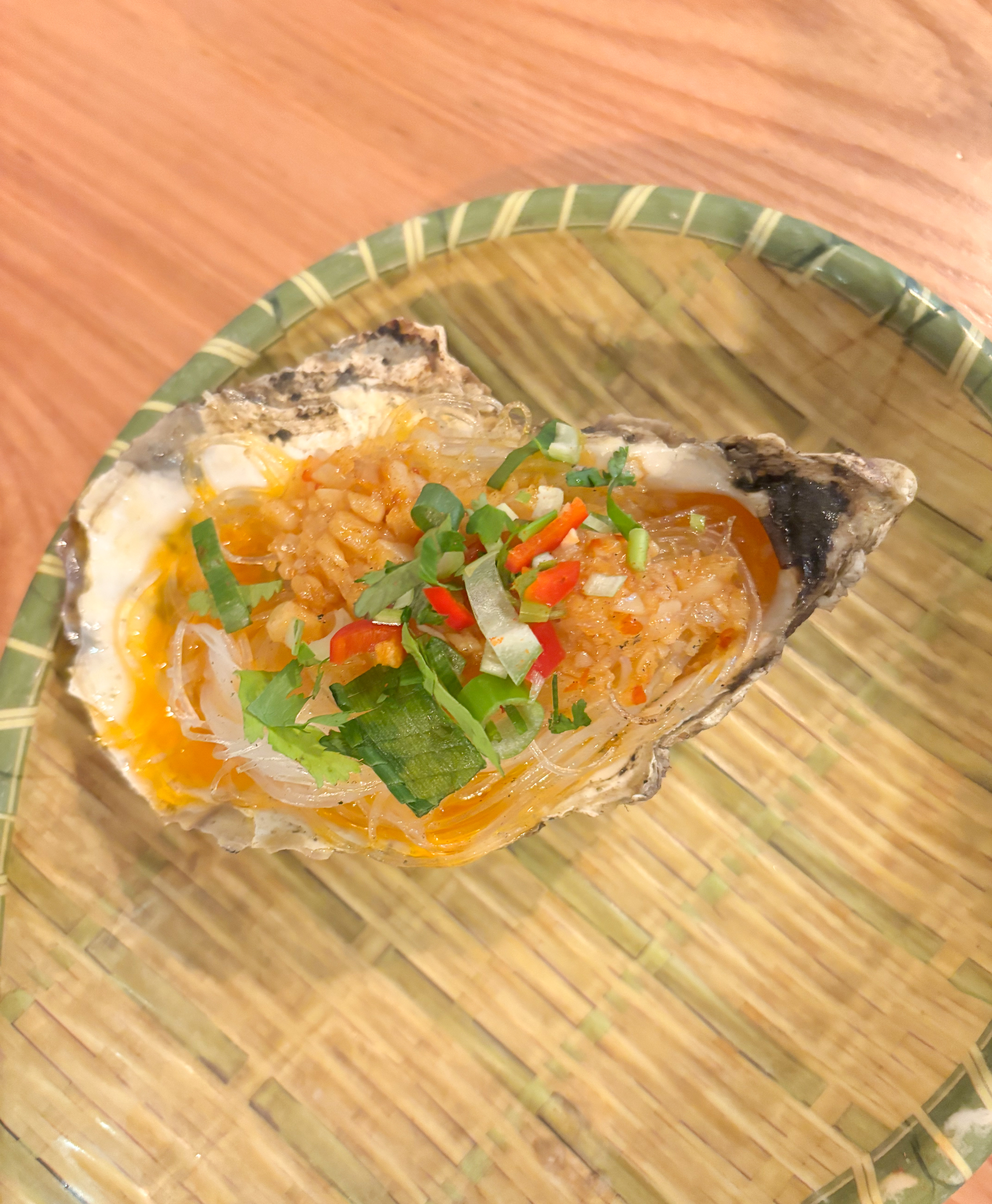
A lone oyster arrives last. It has been barbecued with the shell intact, the slippery meat doused in a slightly oily broth. A topping of vermicelli noodles, chopped garlic, and chilli give it weight. More salt or a bit of soy in the broth would have taken care of the blandness I detect, but it’s still the standout dish.
We wash down all of the spicy goodness with a couple of cans of cold Chinese herbal tea, which our server recommended at the start to counter the greasiness of some of the skewers. The menu refers to it as “Chinese drink”. An excellent thirst-quencher, it has a hint of sweetness and is easy to gulp down.
Chinese food with Uyghur influence is well-known for its high spice levels. Although King Skewer doesn’t advertise it as such, it’s good to have another Dublin restaurant serving the community’s food besides Afanti on Cavendish Row. Korean barbecue is popular in the city, but Chinese barbecue was unheard of before this place came along. I think it could serve as a template for more of its kind.